

What prompt gets a good AI Halloween costume idea?
Paste this into Claude, ChatGPT, Gemini or Whizi and fill the brackets. It gives the model limits, and limits are what turn a generic list into a costume you can build.
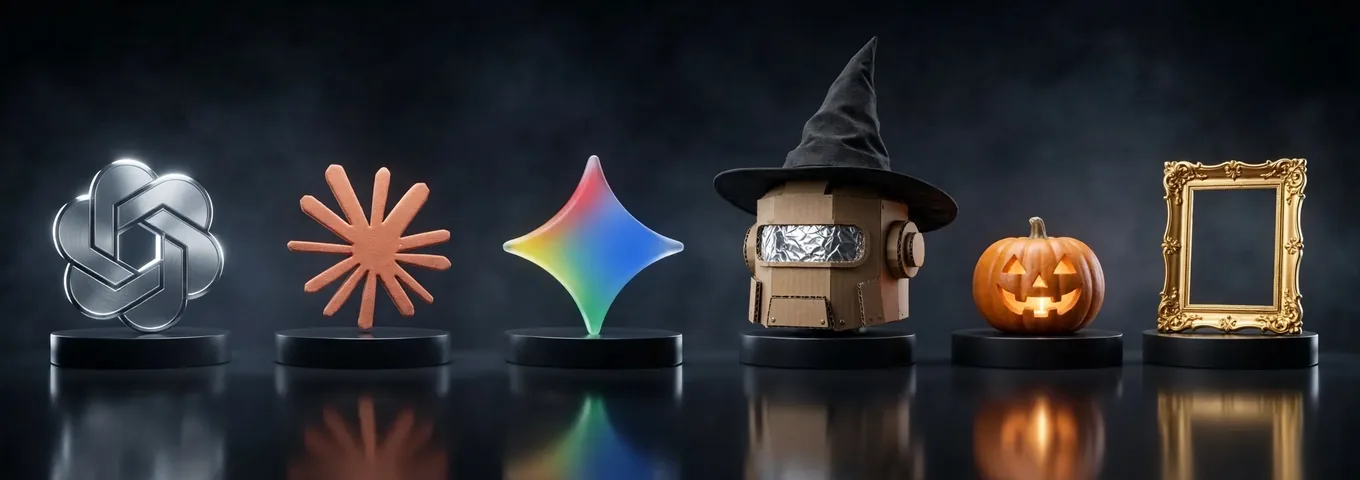
Give me three Halloween costume ideas for [who is wearing it: me, a couple, a family of four, our dog]. Budget: under $[amount]. Time to make it: [hours]. I already own: [list]. For each idea, list the materials, name the hardest step, and say what I can swap if a store is out of stock.
Each bracket closes a loophole. The budget stops a $200 build, the hours stop a sewing project, and the owned list stops the model buying you things you have. The last line makes it admit where the plan could fail.
What are the best prompts for group, couple, kids and pet costumes?
The right prompt depends on who is wearing the costume, because each group has a different constraint. Groups need roles that scale, couples need a pair that only works together, kids need comfort and visibility, and pets need a costume they'll tolerate. Here are six, plus a budget one. Fill the brackets.
- Group of [number] with mixed ages: "Suggest a group costume theme for [number] people aged [ages]. Give each person a role that works without sewing, and make sure one person can wear a simple version if they hate costumes."
- Couple: "Give me five couple costumes where each half is funny alone and funnier together. We are [descriptions, interests]. Rank them by how fast a stranger would get the joke."
- Kids: "Suggest three costumes for a [age] year old who likes [interest]. It must be comfortable for two hours of walking, let them see and breathe freely, and have no loose fabric near the feet after dark."
- Pet: "Suggest three costumes for a [size] [dog or cat] who won't wear anything on the head. Keep each to a bandana, a collar piece or a harness add on, and tell me how to introduce it in the days before."
- Last minute: "It's Halloween and I have [number] hours and these items at home: [list]. Give me three costumes I can finish with what's here, plus one thing under $[amount] to buy that makes the best one look finished."
- Budget: "Give me five adult costumes under $[amount] that take under [hours] hours. For each, list the materials with a rough cost, name the hardest step and say what a cheaper swap would be."
- Closet remix: "I own a [plain shirt color], [jeans or other pants], and [other items]. Using those and at most three added items, give me four costumes that look planned, not thrown together."
What does a good answer to these prompts contain?
A good answer is specific enough to buy and build from, and it admits the hard part. These three examples show the inputs and what to look for. The answers described are written for this page to show a standard, not output from a named model.
Example one, a last minute adult costume. Input: two hours, a black turtleneck, black jeans, aluminum foil, a cardboard box and a flashlight. A good answer picks one idea, such as a retro robot, lists exactly those items, names the hardest step (a box that fits over the shoulders and still lets your arms move) and gives a one item upgrade. A weak answer lists ten unrelated costumes.
Example two, a family of four with a dog. Input: kids aged 4 and 9, one adult who hates costumes, a medium dog. A good answer gives every person a role, makes the reluctant adult the simplest piece and keeps the dog to a bandana. A weak answer gives the dog a full head mask.
Example three, a couple on a budget. Input: under $25 in total, three hours, a shared love of old movies. A good answer prices each part, shows which half does the work and says what to cut if the budget shrinks. A weak answer gives no prices. When a model quotes costs, check them against a store page before you trust them, because it has no live shelf to look at unless web search is on.
Can AI show me in a Halloween costume before I buy?
Yes. Upload one clear photo of an adult who agreed, describe the costume and ask the tool to change only the clothes. ChatGPT, Gemini, Pose and MakeViral all do some version of this, and the table below lists what each states. Four prompts to paste with your photo attached:
- See me in it: "Dress me in a [costume] with [three details: cut, color, one prop]. Keep my face, hair, pose and the background exactly as they are. Match the light in my photo."
- Couple version: "The first photo is me and the second is my partner. Put us in matching [costume theme], with each costume the right fit for each person. Keep both faces unchanged and show us standing side by side."
- Three looks, one photo: "Show me in three versions of [costume]: [color or style one], [color or style two] and [color or style three]. Same pose, same light, one image each, so I can pick before I buy."
- Pet version: "Put a [costume item, such as a small wizard hat or a bandana] on my [dog or cat] in this photo. Keep the animal's face, fur color and the background unchanged, and make the item sit the way it would on a real animal."
A picture is not a costume. It shows a look, not whether the cape hangs right or the hat stays on. Use it to rule ideas out before you spend money. Edit photos with AI covers how these edits work, and AI outfit generator goes deeper on trying clothes on a photo.
What are good AI themed Halloween costumes?
The popular ones are a chatbot, a retro robot, HAL 9000 and a glitched version of yourself. AI is now a costume theme as well as a tool, and it's a safe one if you don't mind explaining it. Business Insider reported on 30 October 2025 that Stephen Michael wore a silver bodysuit with a laminated OpenAI logo and Taha Haider attached a paper Claude logo to an orange shirt. The same story names Sean Percival's 2023 ChatGPT costume at a party in Oslo, which he said was not widely understood then, and a 2023 Midjourney costume built by distorting the Balenciaga logo and adding an extra finger.
Pose lists six builds on its own page: a retro robot in foil with a boxy cardboard torso and a visor, a chatbot with a big speech bubble and a blinking cursor, HAL 9000 in all black with one red lens, a Terminator style cyborg, a holographic assistant in pale blue and a pixel glitch avatar with a mismatched mask. Three prompts turn those into a plan:
- Robot or chatbot build: "Plan a [retro robot, chatbot or HAL 9000] costume for an adult. Use cardboard, foil, [a speech bubble or a red lens] and things I own: [list]. Give me a step list, a materials list and the part most likely to fall apart."
- AI glitch look: "Describe a glitch costume that uses [two colors], a mismatched mask and one visible error, such as an extra finger or a missing outline. Make it work in a dark room, and tell me which part I can make without paint."
A logo costume, such as ChatGPT or Claude, works because the joke is the logo. It fails in a crowd that doesn't follow AI, as the Oslo story shows. Carry a one line explanation, or pick the robot, which everyone reads at once. Can Claude generate images explains why a Claude costume photo needs a different tool.
Which classic costumes does AI picture well?
The classic horror looks are the safest thing to ask an image tool for. LitMedia's list of ten, which is the current number two result for this search, is all classics: vampire count, sexy vampire, creepy ghost, puppet doll, zombie bride, witch, pumpkin hat cat, horror clown, porcelain doll and werewolf. Its page shows no prices, no free limit and no tips on keeping your face intact, and it has no couple or group ideas.
Those ten share one trait: the look is a recognizable shape, so a short prompt works. Add what LitMedia leaves out. Name the fabric and one prop, say who is in the photo, and ask the tool to keep the face. For a pet, LitMedia says its tool takes a pet photo too, and the same keep list applies. Halloween falls on 31 October, so the rush for tools and ideas is in the weeks before it, and the table below is worth rereading each September.
Which AI Halloween costume generator is free?
None of the dedicated tools we read states a free allowance on its Halloween page, while ChatGPT and Gemini are free to start but don't state a daily count. The table lists what each tool says on its own page as of November 2026. A cell that says not stated means the page did not say.
| Tool | Input | Free use and price | Watermark | Best at |
|---|---|---|---|---|
| Pose | One selfie | Free use not stated; $4.99 first week, then $14.99 a week with 400 credits | None on downloads | Costume photos from a selfie |
| MakeViral | One full body photo, or two for a couple | Free use not stated; 3 credits per 2K photo, $9.99 for 100 credits | None stated | Couple costumes in one tap |
| LitVideo (litmedia) | Photo of you or a pet, per its page | Not stated | Not stated | Browsing ten example looks |
| ChatGPT Images | Your photo plus a typed change | On every tier, cap not stated | Not stated | Edits in a chat you already use |
| Gemini | Your photo plus a typed change | Daily quota exists, no number stated | Not stated | Edits on a Google login |
| Claude | Text only, no image output | Ideas and plans only | Not applicable | Costume planning and materials lists |
| Whizi | Text, or your photo with up to 4 images | 2 pictures a month on Free, no card | Not stated | Ideas, picture and photo edit in one chat |
MakeViral says its costume template is for adults only and sends pet costumes to a separate template. Gemini's help page says editing images isn't available to users under 18. Treat those as the rule for any tool: adults who agreed, and no photos of children.
Where Whizi loses: Pose and MakeViral have ready costume looks and a one tap flow, and MakeViral's couple template takes two photos at once. Whizi has no template library and no costume gallery. Its free plan is 2 pictures a month, which is enough to test one idea. What it has is the planning chat and the photo edit in one place.
What mistakes ruin an AI costume picture?
Five mistakes ruin most costume pictures, and each has a fix.
- The face changes. Add "keep my face, hair and hands exactly as they are" and change one thing per turn.
- The costume is generic. Say "high collar cape with red satin lining", not "vampire".
- The light doesn't match. Add "match the light in my photo", or the new costume looks pasted on.
- The group is too big. Edit one or two people at a time and join the results yourself.
- You treat the picture as a plan. The model draws what looks good, not what you can sew, so ask for the materials list separately.
If a result goes wrong, go back to your original photo and send a tighter prompt. Stacking a fix on top of a damaged image makes it worse.
Which one app covers the idea, the plan and the picture?
Use a free tool when you only need one picture. Use one app when you want the idea, the materials list and the photo edit in the same thread, which is what Whizi is for. You ask for three costumes in text, pick one, then attach your photo and have Nano Banana show you in it.
The free plan gives you 10 messages a day on Whizi AI, Auto and Claude Haiku, no card. Pictures a month: Free 2, Starter 20, Pro 100, Powerhouse 500. An edit takes up to 4 source photos and keeps your photo's framing. Pro carries Claude, GPT and Gemini in one app, and its first week is $1.99. On Pro you can also run two models side by side on the same prompt and pick the costume idea you like more.
Web search is on by default in a new chat, so a model can look up a store price. Whizi has no video generation on the website, so there's no costume reveal clip. See how photo edits work in Whizi.
What can AI not do for a Halloween costume?
It can't build the costume, tell you if it fits, or decide who is allowed to be in the photo. Pose says its pictures are generated images and not wearable outfits. Coursiv's guide on the same topic says to read each tool's privacy terms before uploading, and that is good advice, because a face photo is personal data.
Use photos only of adults who said yes. Gemini restricts image editing to users 18 and over, and MakeViral's template is for adults. For children, give the model a written description and keep the face out of it. ChatGPT Christmas photo prompts follows the same rule for holiday pictures.
Last, a costume is physical. A model can't see your sewing skill, and it can't know that foil tears. Treat the materials list as a first draft and test the hardest step before the night.
- State the budget, the hours and what you own before you ask for ideas
- Ask for three costumes and pick the one with a hardest step you can do
- Describe cut, color, fabric and one prop for the picture
- Use a photo of an adult who agreed, and keep children out of uploads
- Test the hardest step in the real materials before Halloween
Frequently asked questions
What is the best AI Halloween costume generator?
It depends on the job. Pose and MakeViral make costume photos from one tap, with Pose listing $4.99 for its first week and MakeViral $9.99 for 100 credits, as of November 2026. ChatGPT and Gemini edit your photo in a chat. Neither dedicated page states a free allowance.
Can ChatGPT or Gemini show me in a Halloween costume?
Yes. OpenAI says ChatGPT Images is available on all tiers and lets you upload a photo and describe the change. Gemini edits uploaded photos for users 18 and over. Keep the face, pose and background in the prompt so only the clothes change. Can ChatGPT edit photos has the details.
What are good AI themed Halloween costumes?
A retro robot, a chatbot with a speech bubble, HAL 9000 and a pixel glitch avatar are the common ones, per Pose's list. Business Insider reported ChatGPT and Claude logo costumes at parties in 2025. A logo only works if the crowd follows AI, so carry a one line explanation.
Can AI suggest a Halloween costume for my dog?
Yes. Give the size, the species and what the animal tolerates, and ask for a bandana, collar piece or harness add on. MakeViral's adult template sends pet costumes to a separate template. A picture of a hat on a dog is not proof the dog will wear one.
